Good morning, and thanks for spending part of your day with Extra Points.
Earlier this year, we at Extra Points announced a new, non-exclusive partnership with College Sports Solutions, an industry consultancy group led by former San Diego State AD Jeff Schemmel. This partnership allowed for CSS to use our Extra Points Library database for their client projects, saving their clients and time and money.
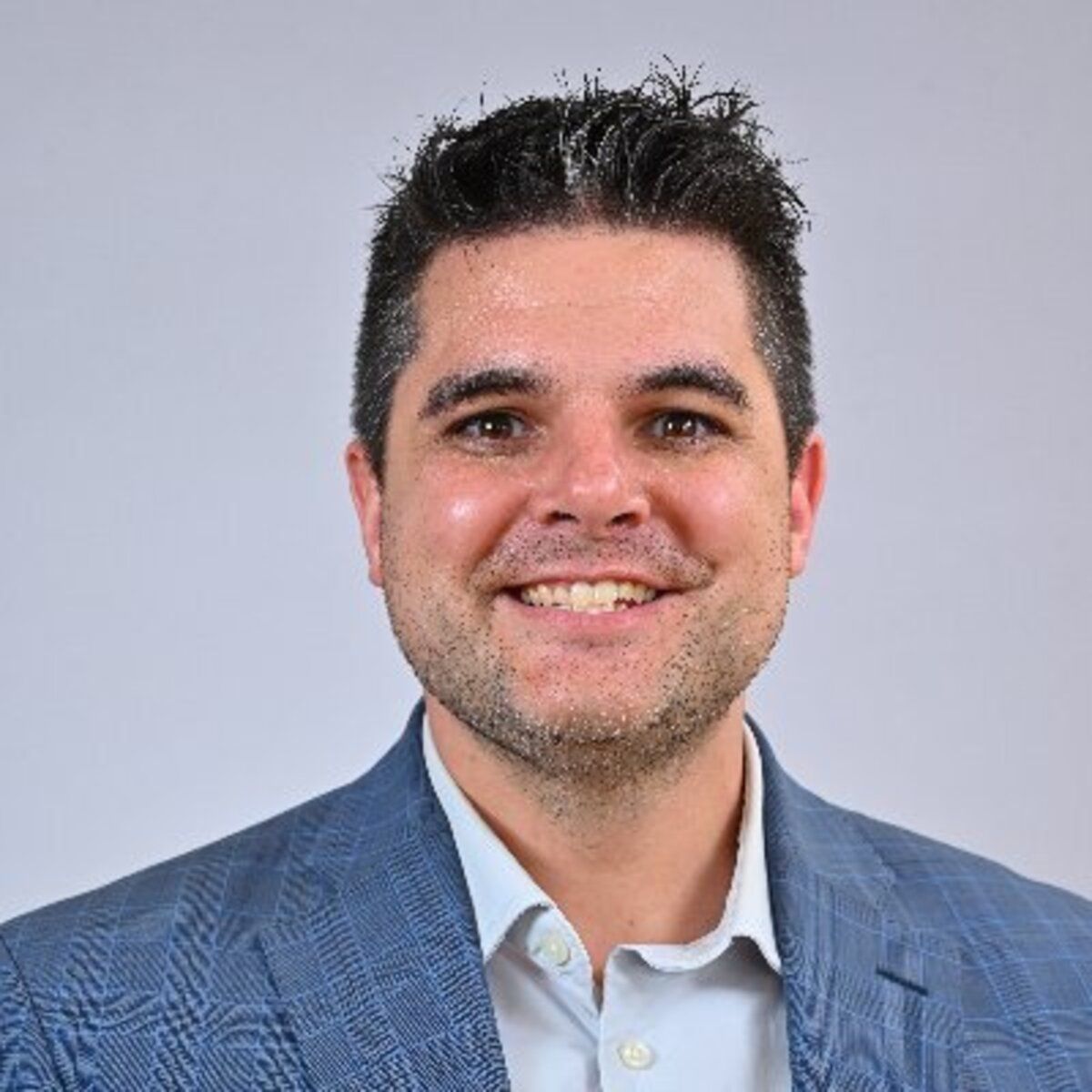
It also means that we talk to Jeff and his colleagues on a regular basis. So as the college sports industry grapples with another series of massive changes, and with the biggest industry gathering (NACDA) in just a few weeks…I thought now would be a good time to pass the microphone over to Jeff. He’s been in his game far longer than I have, and knows quite a bit that I don’t.
Where does he think everything needs to go?
His remarks are below:
For more than 35 years, I have been involved in intercollegiate athletics. From my first administrator days in 1988 at my alma mater, Kansas State — where our first major decision, thanks to leaders like Steve Miller, was to hire a pretty good football coach named Bill Snyder – through my days at Minnesota, Arizona State, Conference USA, and San Diego State, and now more than a decade of consulting with universities and athletic departments, I have witnessed constant change across the college athletics landscape. But nothing compares to the pace and magnitude of change we have seen in the last five years.
Matt Brown asked me to offer some thoughts on the practical realities universities and athletic departments are navigating today. To begin, it is important to acknowledge that many recent developments have unquestionably given long overdue benefits to student-athletes and their families. From cost-of-attendance and Alston payments to family travel support for championship events, and now NIL and revenue sharing, today’s student-athletes have opportunities and resources that previous generations never had. That progress matters.
At the same time, I hope we do not lose sight of what has always been the greatest benefit of intercollegiate athletics: education. Not just classroom education, but the preparation for life that comes from being part of a team, representing a university, overcoming adversity, and learning discipline, accountability, and resilience through competition.
I was fortunate to be coached and learn at K-State under one of the great leaders in college athletics, DeLoss Dodds, whose impact on Texas Athletics is still evident today. Leaders like Coach Dodds understood that athletics was ultimately part of a larger educational mission. Unfortunately, we hear less and less about that mission today.
Even as student-athletes rightfully gain increased financial opportunities, we should still ask difficult questions. Are we teaching lessons that will serve young people for the rest of their lives — as professionals, spouses, parents, teammates, and citizens? Does unrestricted transfer movement encourage personal growth and perseverance, or does it diminish some of the most valuable lessons that come from commitment, adversity, and accountability?
With that admittedly sermonic preamble, I wanted to address several of the major issues currently confronting universities and athletic departments across every level of college athletics.

The Top 100 Rising ADs / Future ADs list by Silver Waves Media recognizes the next generation of leaders shaping the future of collegiate athletics. This feature highlights emerging administrators who are making a significant impact across areas such as student-athlete development, external relations, communications, compliance, marketing, operations, fundraising, and overall leadership within their departments.
As the landscape of college athletics continues to evolve, these individuals represent the innovation, vision, and dedication driving the industry forward. The list celebrates professionals who have already established themselves as difference-makers while positioning themselves as future Athletic Directors and influential voices within intercollegiate athletics.
Silver Waves Media is proud to spotlight the talent, work ethic, and leadership of these rising administrators while providing recognition to those helping shape the future of sports at every level.
First, however, a candid admission
As an industry, we failed for years to act proactively on NIL. Long before the courts forced the issue, college athletics leadership should have created a framework allowing student-athletes to benefit from their name, image, and likeness. Our failure to do so led directly to much of the litigation that has reshaped the modern college athletics model. As a former chair of the NCAA Division I Championships Cabinet, I include myself in that responsibility.
So here we are in 2026, entering the second year of expanded scholarships, roster limits, revenue sharing, and the continued evolution of NIL. It is a good time to examine several issues that now dominate conversations across Division I, Division II, Division III, and even the NAIA.
1. The Sustainability of Revenue Sharing
Across virtually every level of college athletics, there is growing concern that the current trajectory is financially unsustainable. The dollar amounts may differ between the Big Ten, SEC, and other Power Four institutions versus smaller schools, but the underlying issue is the same: sustainability. The only real differences are the zeros at the end of their financial statements.
Most universities have developed short-term strategies to remain competitive in their own space, but few can confidently project beyond the immediate future. There are two primary reasons for that uncertainty: first, nobody knows what additional changes may still be coming; and second, many institutions simply cannot identify long-term annual revenue sources capable of supporting the escalating financial demands of the current model.
2. NIL and Revenue-Sharing Contracts
Another increasingly difficult issue involves the enforceability of NIL and revenue-sharing agreements.
Many contracts entered into in good faith — particularly multi-year agreements — are now being challenged legally. The reality is that today’s transfer portal environment effectively creates annual free agency. Unlike professional sports, where multi-year contracts are supported by collectively bargained systems and established league rules, college athletics currently lacks comparable structural stability.
As a result, institutions are attempting to enforce agreements that require student-athletes to remain enrolled and participating in order to receive compensation, while student-athletes simultaneously desire to retain broad freedom to transfer annually. That contradiction has already produced significant litigation, and more is certainly coming.
Universities frequently ask me how to draft agreements that maximize enforceability, and we are creating those models, but as we have seen, that has not stopped the challenging of those agreements.
What college athletics desperately needs is uniformity — consistent rules, expectations, and enforcement mechanisms that apply to all parties. Achieving that will require cooperation among the NCAA, the College Sports Commission, conferences, universities, and importantly, student-athletes and their representatives. An important first step is to establish universally accepted parameters around transfer eligibility and portal movement.
3. Agent Certification and Representation
Another major concern is the lack of standards governing individuals who represent student-athletes.
At present, virtually anyone can present themselves as an “agent” — whether qualified or not. Too often, student-athletes and their families are being advised by individuals with little experience, questionable motives, or financial incentives that conflict with the student-athlete’s long-term interests.
The NFL, NBA, and MLB maintain certification systems and regulatory standards for agents. In many cases, they also limit the percentage of compensation agents may receive. College athletics urgently needs a similar framework. This is not about limiting opportunity. It is about protecting student-athletes and families from exploitation during one of the most important financial periods of their lives.
4. Private Equity and Alternative Revenue Models
Private equity investment in college athletics has received enormous attention recently, both at the institutional and conference levels.
The concern is obvious: private investors expect returns, and many university leaders remain uncomfortable with surrendering future revenue streams or institutional control in exchange for short-term capital. Some institutions have moved forward with private equity partnerships, and it will be instructive to see how those arrangements evolve over time.
Personally, I believe a more sustainable path may lie in broader university-affiliated business development initiatives. Increasingly, institutions are exploring public-private partnerships involving real estate, retail, entertainment districts, housing, and mixed-use developments connected to athletics infrastructure. One of the early innovators in this area was Jamie Pollard at Iowa State, and many universities are now pursuing similar models.
In addition, schools continue to seek expanded uses for existing athletics facilities — concerts, rodeos, festivals, and other revenue-generating events that maximize the value of stadiums and arenas beyond game days.
5. The NCAA and the College Sports Commission
Finally, college athletics needs far greater coordination between the NCAA and the CSC. At present, authority, governance, and enforcement responsibilities remain fragmented and inconsistent. Compounding the challenge are state laws that often create vastly different regulatory environments from one institution to another. The result is confusion and difficult enforcement, not only for universities and conferences, but also for student-athletes themselves.
Clear governance structures and enforceable national standards are essential if college athletics hopes to create long-term stability. I sincerely hope our leadership in Washington, both Republican and Democrat, recognize the need for action.
There are countless additional issues shaping the future of this intercollegiate athletics enterprise that I have loved since leaving South Dakota as an 18-year-old to attend and compete at K-State and become part of its athletics community.
As college athletics continues this fast-paced evolution, Kristi Dosh and I will continue working alongside Matt and the team at Extra Points to provide analysis, perspective, and practical guidance with articles such as this and the Extra Points Library, which has become one of the premier resources for information and data across the entire college athletics landscape.


